During twilight, while the sky is getting darker, the balance between the light of the illuminated
buildings and the light of the sky is constantly changing. It is difficult to find the best moment for a balanced
photograph. The artificial lights should stand out clearly, but the sky should still be blue. To find the optimal
exposure can also be difficult. Therefore, I usually take a sequence of photographs at different times and with
different exposure bias settings.
There was a special problem when making this photo. When I was ready to take a sequence of
photographs, all lights were switched on except the ones on the surface of the large building (Klimahaus). So I had to
be prepared to combine two images, i.e. take the lights from a later photo and place them on a photo taken earlier.
This can only be done if the two images are congruent with respect to each other. Therefore, I switched off Auto Focus
after having taken the first shot. Otherwise, the camera would autofocus prior to each shot which would lead to varying
focus settings. The images of the sequence would thus have nonidentical reproduction scales, i.e. the images would not
be congruent. If the image with the lights is not congruent with respect to the basic image, the lights would be
misplaced.
Exposure was critical. Due to the ultra wide-angle lenses large 104° horizontal angle of view, the color of the
sky spans from light blue on the left-hand side of the scene (where the sun went down) to deep dark blue on the
right-hand side. Images 1 to 3 are overexposed with respect to the blue component of the sky on the left-hand side,
resulting in banding, i.e. a non-smooth color gradient. Image 4 is exposed correctly. On the subsequent images, the sky
is too dark. On image 7, the lights on the surface of the large building are switched on.
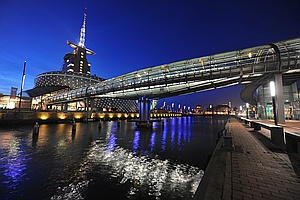
From the sequence of shots, I chose image 4 as the basic image. The lights of the building
were cut out of image 7 with Gimp’s Select by Color tool and pasted onto the basic image. From images 3, 5
and 7, illuminated windows of the hotel in the background were added. The elevator door with the brightly lit cabin
behind was replaced with the elevator door from image 7. To intensify the reflections on the water surface, image 7, set
to 25% opacity, was added in Lighten only blending mode.

      File name: 001.tif
  Date and Time: 2009-12-07 16:51
  Exposure time: 1.3 s
       Aperture: 1 : 4
  Exposure bias: 1
ISO sensitivity: 200
   Focal length: 14 mm
|

      File name: 002.tif
  Date and Time: 2009-12-07 16:55
  Exposure time: 1.6 s
       Aperture: 1 : 4
  Exposure bias: 1
ISO sensitivity: 200
   Focal length: 14 mm
|

      File name: 003.tif
  Date and Time: 2009-12-07 16:59
  Exposure time: 2 s
       Aperture: 1 : 4
  Exposure bias: 1
ISO sensitivity: 200
   Focal length: 14 mm
|

      File name: 004.tif
  Date and Time: 2009-12-07 17:01
  Exposure time: 1.3 s
       Aperture: 1 : 4
  Exposure bias: 2/3
ISO sensitivity: 200
   Focal length: 14 mm
|
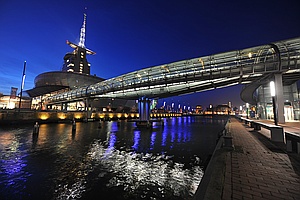
      File name: 005.tif
  Date and Time: 2009-12-07 17:02
  Exposure time: 1.3 s
       Aperture: 1 : 4
  Exposure bias: 2/3
ISO sensitivity: 200
   Focal length: 14 mm
|
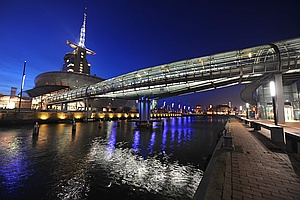
      File name: 006.tif
  Date and Time: 2009-12-07 17:05
  Exposure time: 1.6 s
       Aperture: 1 : 4
  Exposure bias: 2/3
ISO sensitivity: 200
   Focal length: 14 mm
|
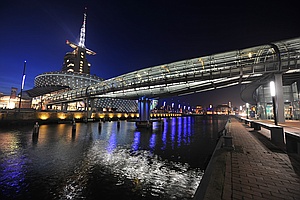
      File name: 007.tif
  Date and Time: 2009-12-07 17:11
  Exposure time: 1.6 s
       Aperture: 1 : 4
  Exposure bias: 1
ISO sensitivity: 200
   Focal length: 14 mm
|
|
Camera used: Nikon D700. Lens used: Nikkor 14-24mm 1:2.8.
Images copyright 2009 - 2026 by G.W.Schnell. All rights reserved.
